

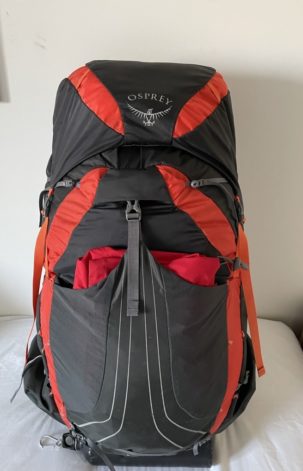
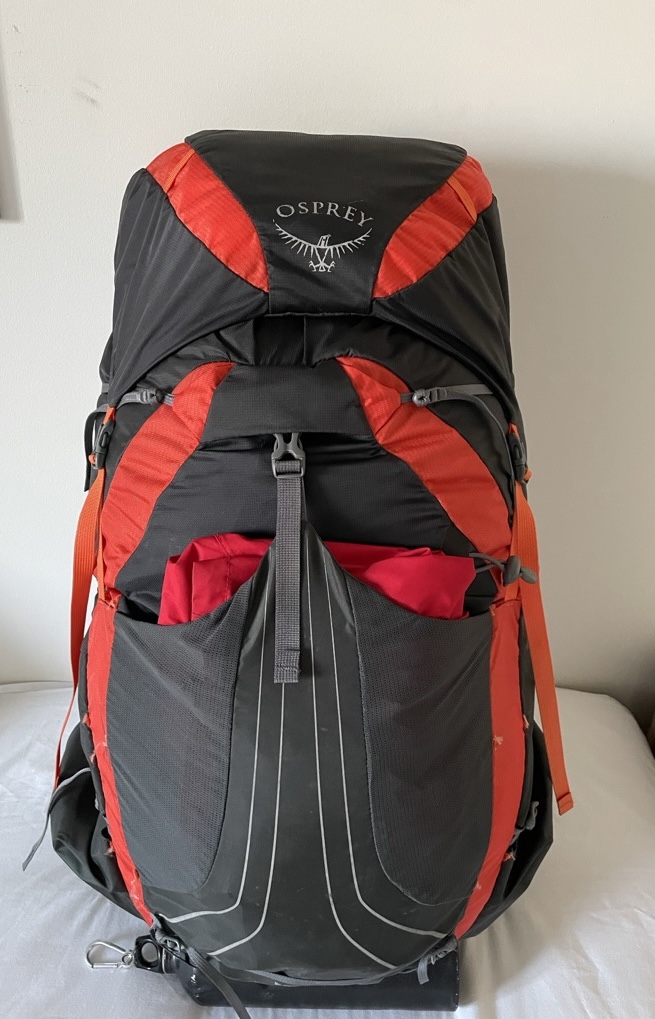
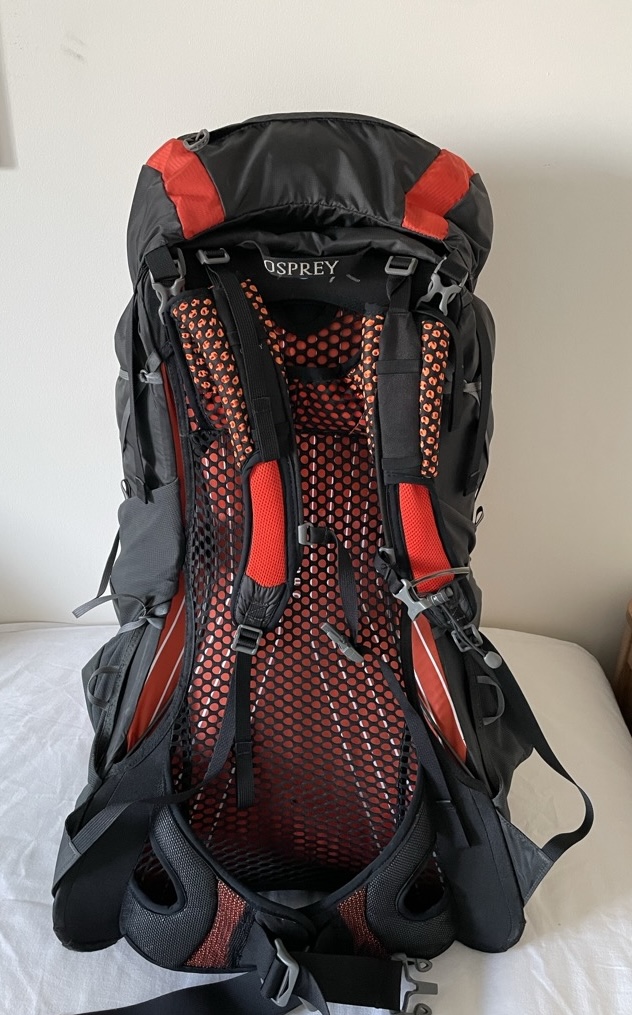
The Osprey Exos / Eja range is Osprey’s lightest range of expedition packs. They’re great bags, but in the end I decided not for me, and I’m again hunting for the perfect pack.
Osprey’s Exos & Eja packs are exactly the same, with the Exos being the men’s version, and the Eja the women’s. But the features are identical.
The Bottom Line
 (3 / 5)
Though not for everyone, the Osprey Exos 58 is undoubtably a fantastic bit of kit. It combines low weight and high functionality and comfort, with a full frame and an excellent, airy back system. It does have a few quirks though, which I’ve explained below – both the positive and the negative.
Purchasing
You can usually get these bags direct from Osprey, for something like £220. However, as with most outdoor gear, there’s also a healthy second-hand market for them on eBay, Vinted, or similar, if you can hold out for the right deal. As with any Osprey product, it’s easily well enough made to be a reasonably safe bet to buy used.
Feature Breakdown
- Osprey Airspace back system: supremely breathable and very comfortable
- Adjustable-length back system (on the newest model only)
- Removable ‘brain’: the top compartment comes off, if you want to loose some weight and don’t need the capacity.
- Large mesh pocket, for coats etc. – and two bottle pockets on the sides
- Internal pocket for hydration bladder
- Single ice axe / trekking pole loop and tie point
- Under-arm, quick-access trekking pole storage: a feature of many Osprey bags, makes for a weird place to keep the poles – but it’s surprisingly convenient
- Adjustable load tweaking straps: help compress the bag when it’s emptier, and carry the load efficiently when it’s full
Best Features of the Exos 58
Back System
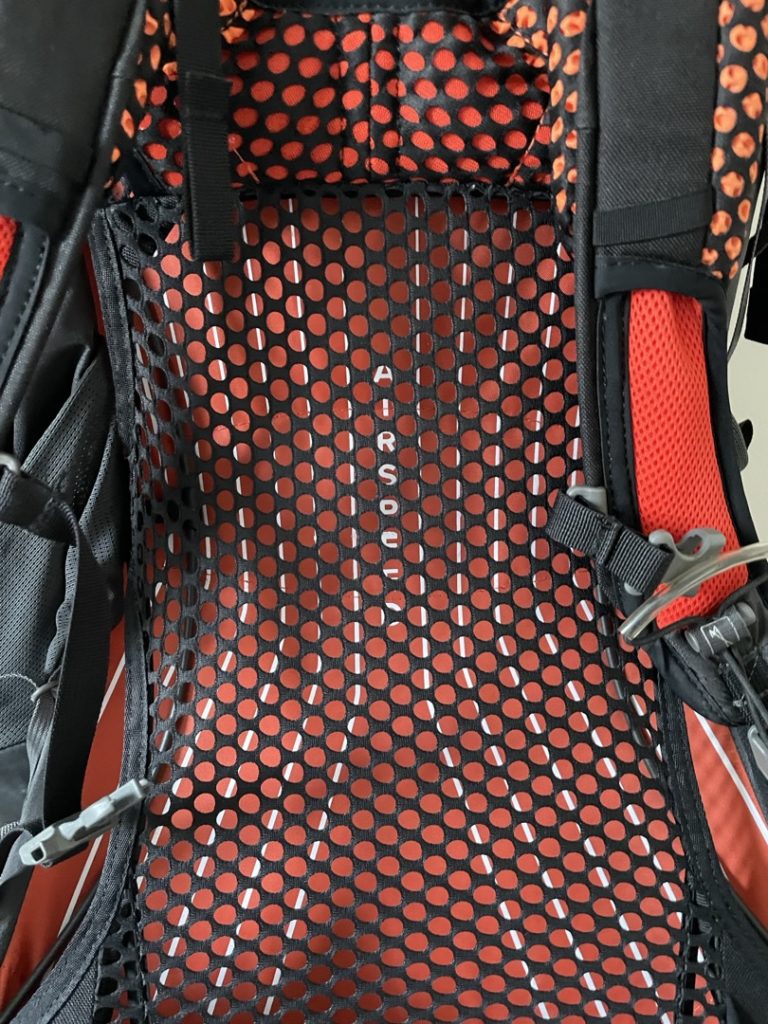
One of my absolute favourite things about this bag is the back system. Osprey’s ‘Airspeed’ keeps the entire bag floating a few centimetres off your back, which means the Osprey Exos is supremely breathable. The wire frame design means that the whole thing hugs your back very nicely, and conforms to be comfortable even with heavy loads. Mine is a slightly older version, which means that the back system is not adjustable in length (which was a problem for me), but the new version does have adjustment points for the length.
Mesh Pockets
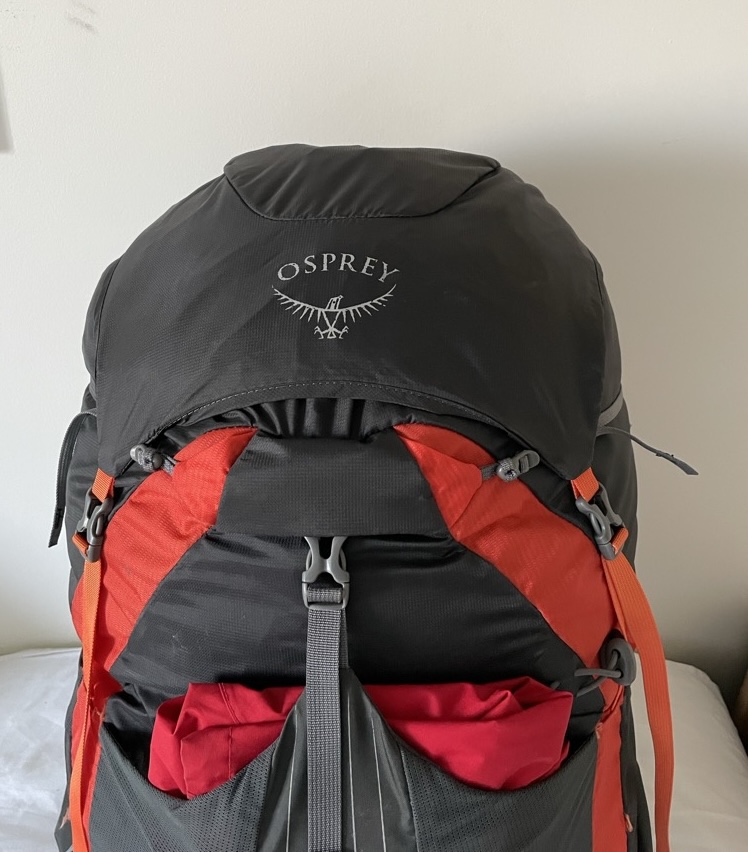
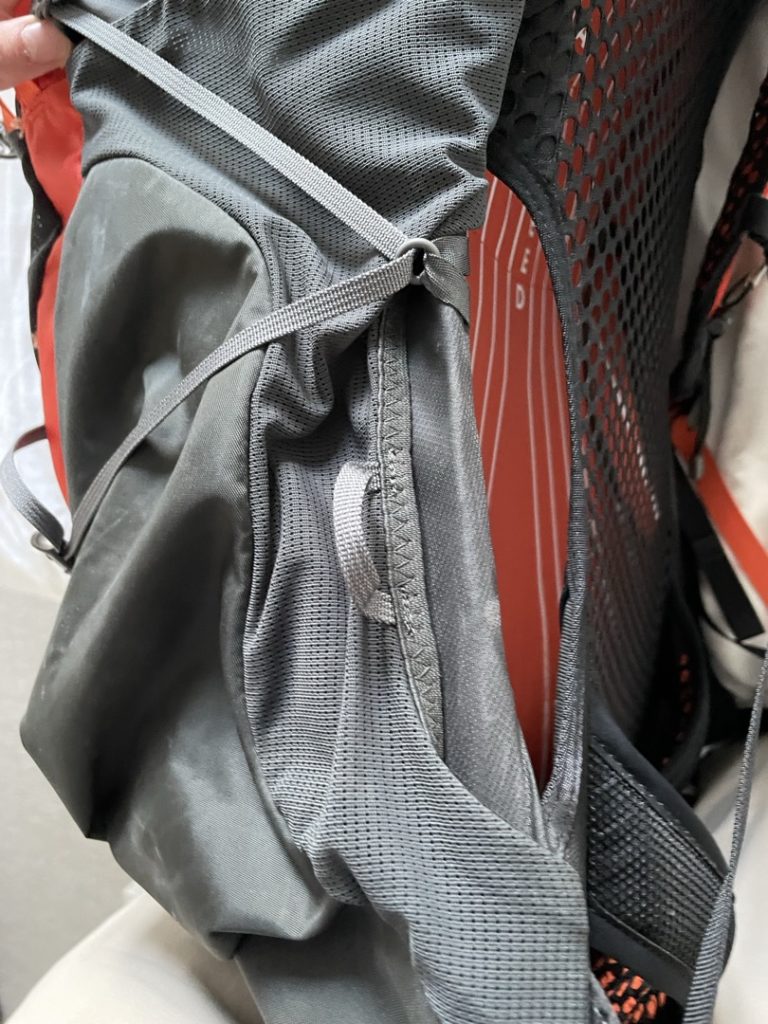
The large mesh pockets – two on the sides, designed for water bottles but easily big enough for more, and the main one on the back of the bag, are fantastic. I usually only carry one water bottle, and the other side pouch is easily big enough for a pair of light camp shoes or flip flops – the one ‘luxury’ item I never leave behind on multi-day camping trips.
The main mesh pocket on the back of the bag, which is becoming more and more standard across packs, is fantastically useful. It easily fits my waterproof trousers and coat, for quick access if needed – or some snacks, a fleece, hat, etc. – pretty well anything I might want to have quickly accessible.
Removable ‘Brain’
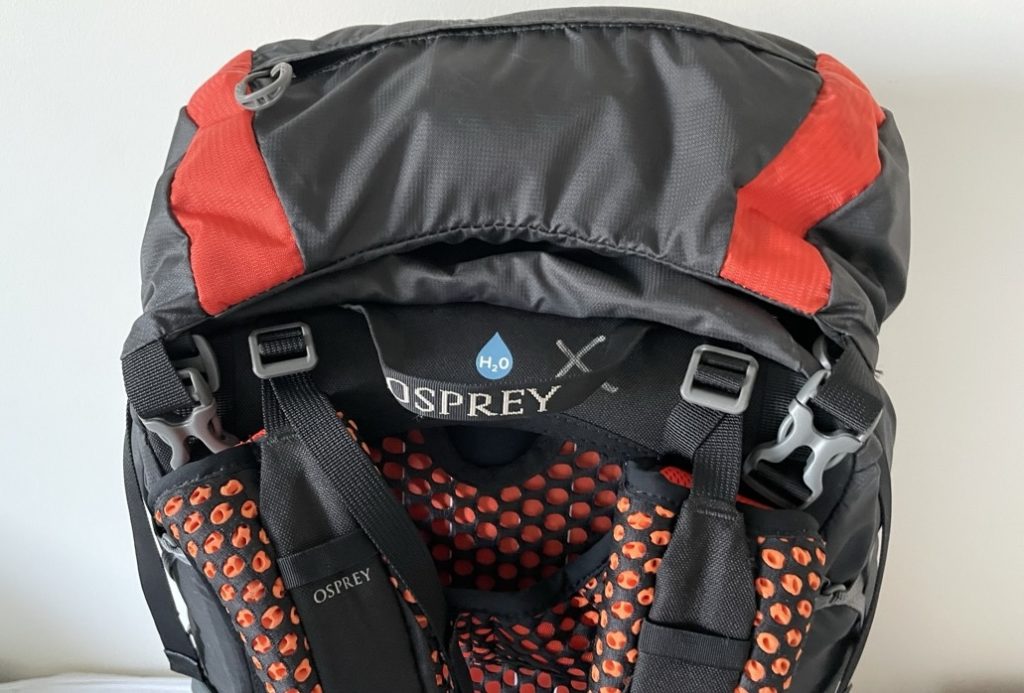
The top section of the pack, the ‘brain’, can be removed very easily: two buckles. No messing about with feeding straps through hardware, as on some other bags. Even though it’s simple, it feels secure, and I’d be very surprised if it managed to come off unexpectedly.
Drawbacks
Let’s start this section with a couple of drawbacks that apply to the previous version, which I had – but won’t apply if you get the latest version. Look out for these if you’re buying used:
Back System
On the old version, the length of the back system is fixed, because the straps of the harness are stitched directly to the back. The bag’s available in three sizes, but even so I felt this annoying: I’ve often had the need to adjust the length of the back based on how heavy the load is, and with this bag that’s just not an option. It also makes buying the Exos 58 / Eja 58 used a bit more challenging: getting the right size online isn’t always as easy as it seems, and you can’t try it on in shops anymore because they don’t sell the new version.
Hip-belt Pockets
The old version, that I have, doesn’t have any. Either they, or some harness pockets, would be really useful. This has been fixed on the latest version, which has good hip-belt pockets.
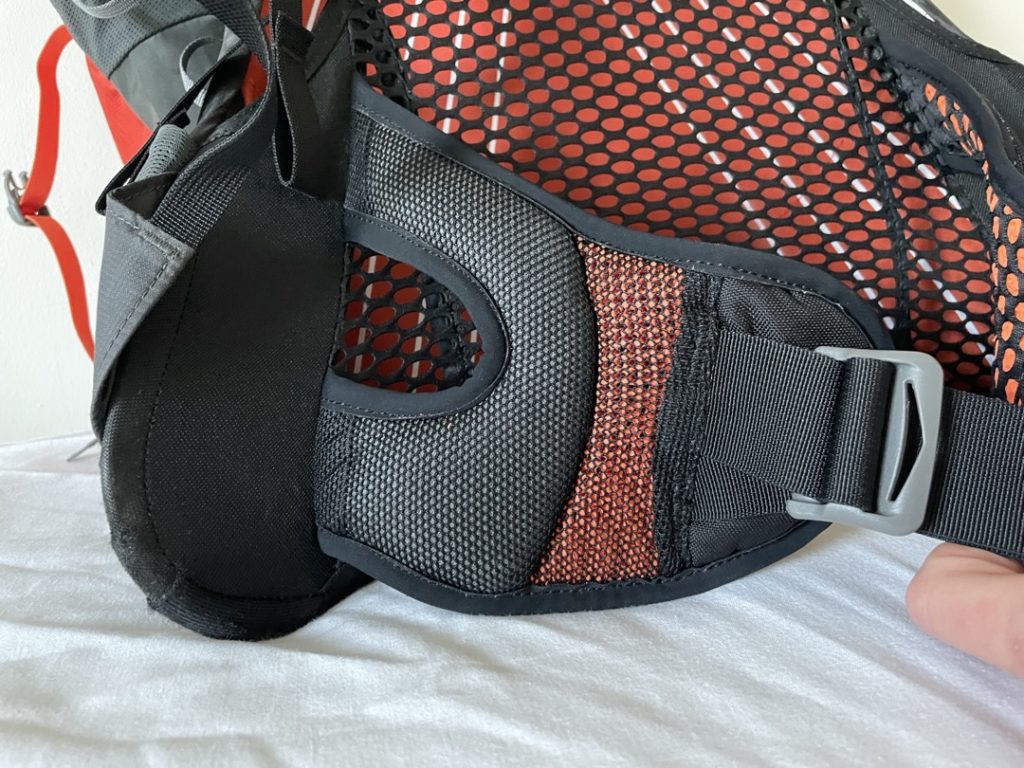
Now on to things that apply to the new bag too:
Load Straps
The straps that run up the outside of the bag are continuous, from bottom to top. There’s a lock point, where the webbing feeds through two rings instead of one, halfway up, but in my experience it does slip. That means that when the bag is relatively empty, and you tighten the load straps to compress the bag and keep weight distribution relatively even, all the contents of the bag still migrate their way to the bottom as the straps slip. So you get all the weight at the bottom, and none at the top – which makes for an ungainly feel on the back. And it makes the ‘brain’ go really floppy on top. A small inconvenience but definitely noticeable…
‘Brain’ Flap
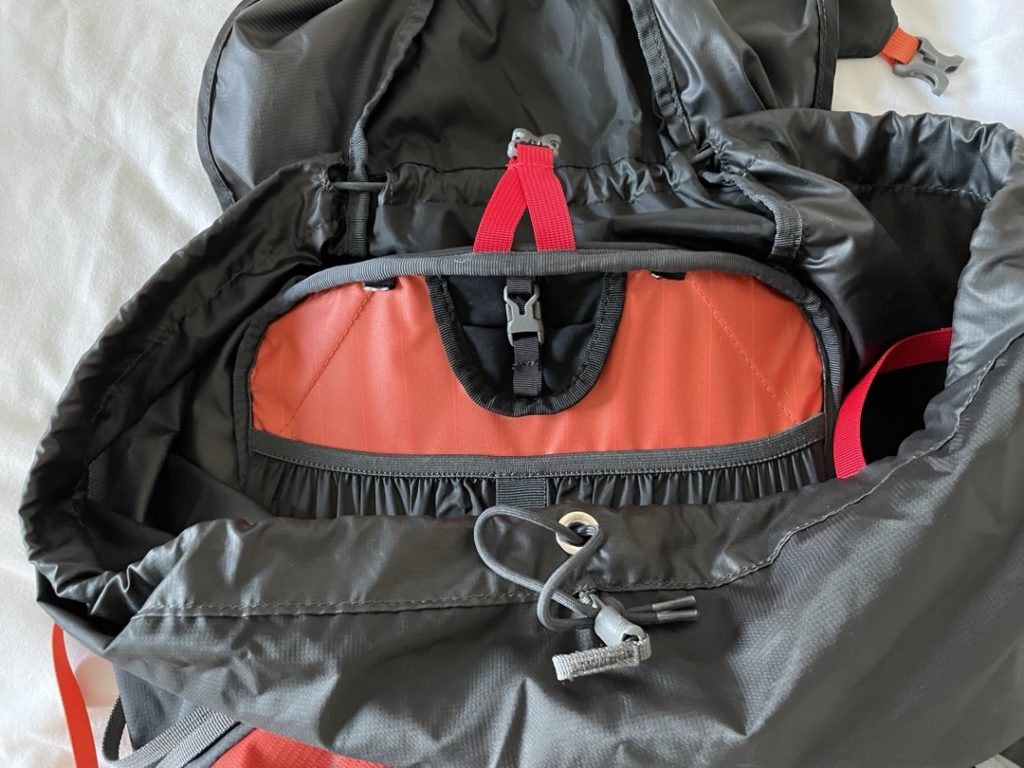
If you choose to remove the brain of the bag, it comes with a fabric square that clips over the top instead. It’s really useful, because it provides a space to clip things under, even if you’re not using the brain – and of course it keeps rain out of the top of the pack. But it’s not removable: when the Brain is attached, it still sits there, flapping about underneath it. I’ve not found a neat way to get it out the way – which realistically is nothing more than slightly annoying, but slightly annoy me it does.
See the image above under ‘mesh pockets’ for what the flap looks like.
Shape
The wire frame that I mentioned above does make the bag fantastically comfortable. But, because of its shape, it gives the bag another annoying trait: when you take it off and put it on the ground, it rarely stands up. Most of the time, it will roll onto its ‘back,’ straps in the air. Usually that’s ok, but it gets particularly annoying then you’re trying to pack it, and it suddenly falls over and spills all your stuff out all over the ground. Again.
Conclusions
This is absolutely a fantastic bag, and one that I really like. I bought mine used, for £60 (which is quite a bargain), in very good condition. But, after using it for several trips, I decided not to keep it. Partly because of all the reasons above, but partly also because I could sell it for significantly more than £60!
Ultimately, if you’re looking to buy new and don’t mind the price, I’d say go for it – it’s great, and you won’t have the old-version issues that I had. On the other hand, if you’re looking for a good price on a used pack, the Exos or Eja might not be exactly what you’re after.
If the Exos / Eja is a bit big, how about an Osprey Talon / Tempest: they come in a whole range of sizes and are excellent all-round packs. Our review here. Or, if you want a big bag to come cheap, consider the Vango Contour 60 (our review).